
Projecten
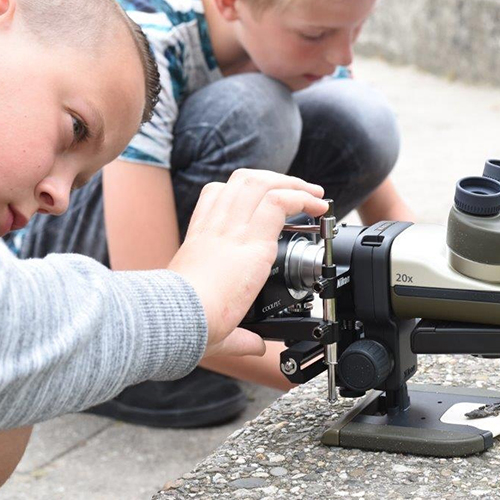
Download the free educational material 'Zoom: Light on Small', developed in collaboration with Nikon. The package consists of multiple lessons in which students explore the fascinating world of small things. They investigate how life, survival, and coexistence work through the themes of ecosystems, plants, and animals
Introduction
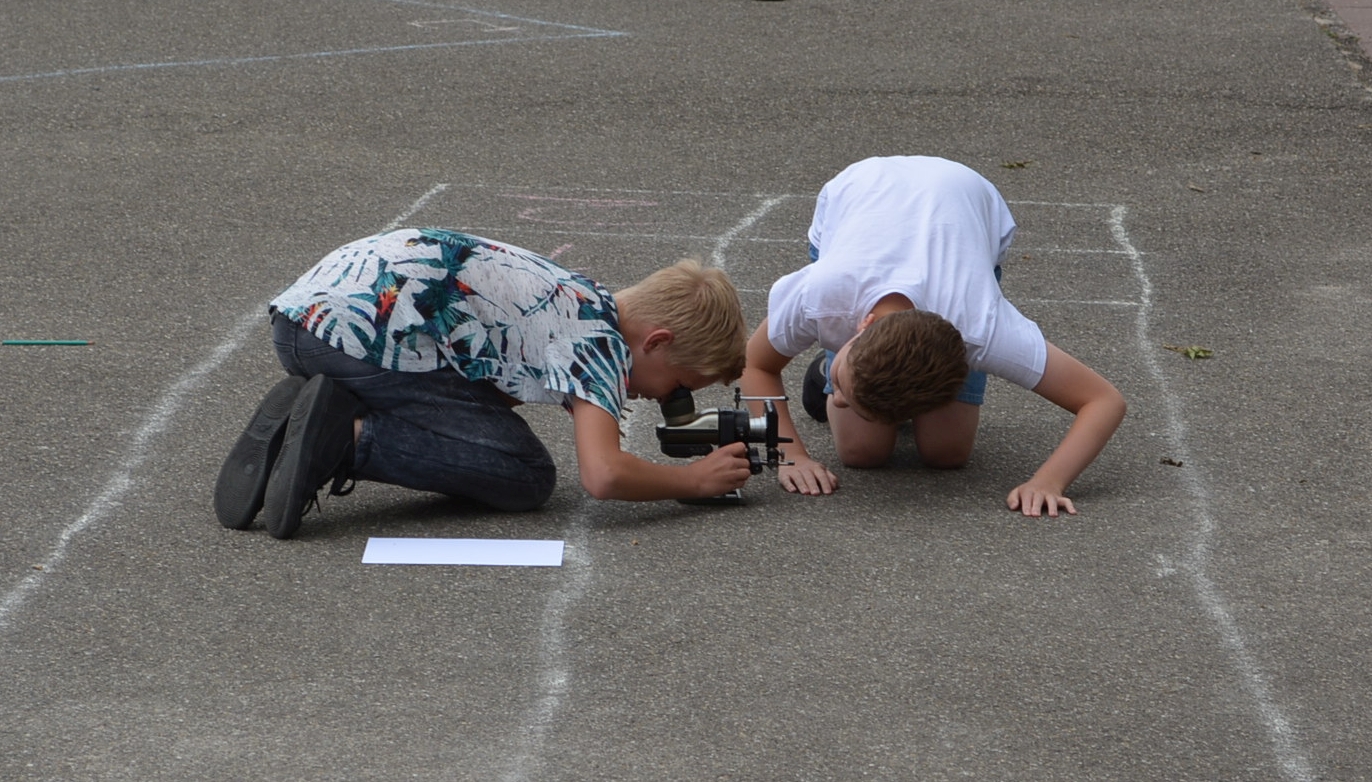
In this lesson package, students explore nature using microscopes. They learn about ecosystems and recreate an ecosystem in a container. An ecosystem can be, for example, a ditch, a forest, or a field. In an ecosystem, different plants and animals live together, and it also consists of non-living materials such as water and soil. Conditions such as temperature, light, soil, and moisture influence the ecosystem. To observe everything properly, students need a microscope or a magnifying glass.
Educational materials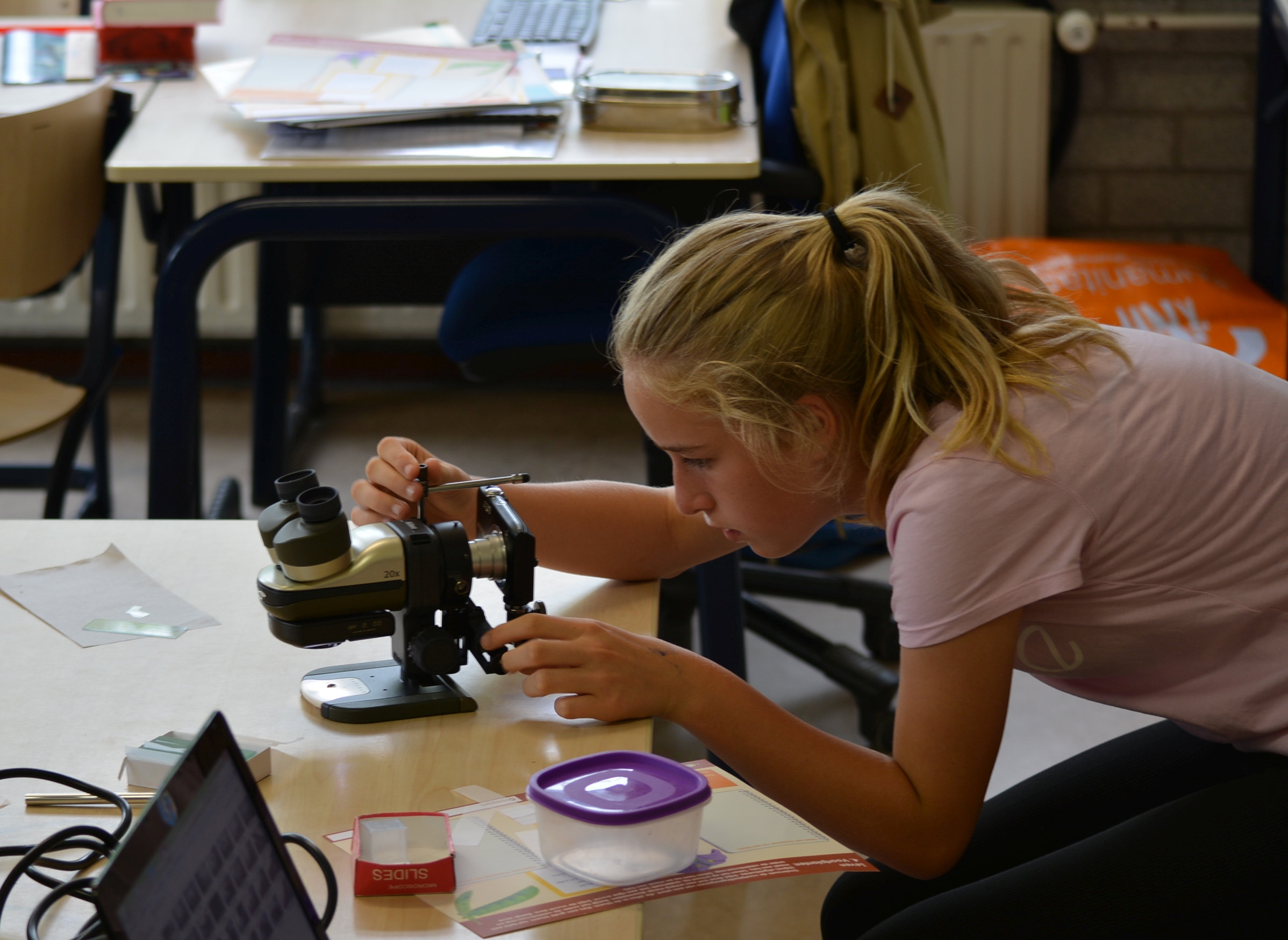
Lesson 1: The first lesson begins with a short discussion about how microscopes and other instruments were invented and further developed, and the role they play in discoveries. In this lesson, students practice using these instruments.
Lesson 2: The second lesson focuses on what an ecosystem is. Students collect plants, animals, soil, and water to create their own ecosystem, for example a small forest, a ditch, or a marsh. Through this, students discover the influence of the four elements, the food web, and the cycle of matter.
Lesson 3: In the third lesson, students come up with a research question about ecosystems. They investigate which part of the ecosystem they want to study further—the conditions, the plants, or the animals—using the accompanying worksheets.
Lesson 4: In the fourth and final lesson, students use the information they have collected for the final assignment and work together to create an information sheet about the ecosystem.
Microscopes
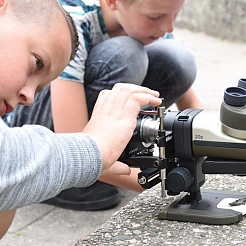
Microscopes can be used alongside the teaching materials. Whether it's insects, plants, moss, litter, or soil—everything looks completely different when magnified 20 times. Several NDE (Nature and Environmental Education) centers offer field microscopes that you can borrow (including Stad en Natuur Almere, De Grote Rivieren Heerewaarden, De Papaver Delft, Hertenkamp Enkhuizen, Natuur en Milieu Overijssel, Natuur en Milieueducatie Haarlem, and Utrecht Natuurlijk).
Zoom: Light on Small has been funded by Nikon Europe.

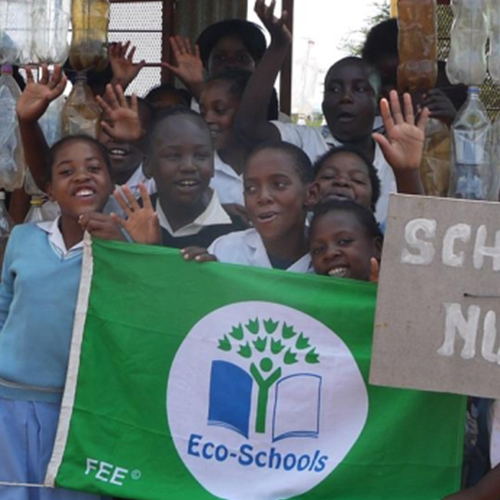
Having international connections with other schools can be an incredibly valuable learning experience for students.
Eco-Schools enables schools to exchange ideas and experiences with one another around sustainability themes and the Sustainable Development Goals (SDGs). Imagine being a student in the Netherlands and discussing what water means in your country with students from a school in Kenya and a school in India. You learn to explore what water means in your own country, discover different cultures and how they manage water, practise foreign languages, communicate through digital channels, and much more.
Through various European funding programmes, it may even be possible to visit these countries or welcome students from partner schools to the Netherlands.
Would you like to connect with an Eco-School abroad? Please contact
We also regularly receive requests from schools abroad. Below you can find the current requests.
Partner School Wanted for Sustainability and Cultural Exchange Project
Country and school: France, MFR Le Cèdre (near Angers)
Education level: Secondary education
Student age: 15–16 years
Theme: Sustainable development, sustainable mobility and cultural exchange
Date of request: 7 July 2026
A French secondary school, MFR Le Cèdre, near Angers, is looking for a Dutch partner school for an Erasmus+ exchange project from 12 to 16 April 2027. The school follows an alternance education model, in which students alternate between education at school and practical work experience. During the exchange, a group of 20–24 students and two teachers would travel to the Netherlands to work together on sustainable development, green mobility and intercultural learning.
The programme can be developed jointly and could include:
- Presentations by both schools
- Mixed French-Dutch student groups
- Sustainability workshops
- Comparing young people's daily lives in both countries
- A joint final project, such as a poster, presentation or video
- Cultural exchange activities
The French school would preferably travel by train to support the sustainable objectives of the project. For accommodation, a youth hostel is being considered, but staying with host families is also an option if the receiving school has experience with this.
If you are interested, please contact teacher Bojana Le Porceau at
Partner School Wanted for a visit on sustainable topics: Energy and Items
Country and school: Spain
Education level: Secondary education
Student age: ?
Theme: Energy and items
Date of request: 16 Septermber 2026
A Spanish secondary school is looking for a Dutch partner school to host a one-week visit sometime during the current school year. They are looking for a school that works on the topics of Energy (renewable energy) and Items (reducing consumption, reusing and recycling). The programme can be developed in consultation with the partner school.
Over the past two years, this school has visited Eco-Schools in the Netherlands, including Bonhoeffercollege and the Libreon school group. Bonhoeffercollege had the following to say about the experience: “The exchange with another country is incredibly inspiring. The students from the eco-team are still in contact with the Spanish students and continue to exchange ideas with one another.”
If you are interested, please contact teacher Chechu +34 625 67 67 16.
Participate in the Global Action Days 2027!
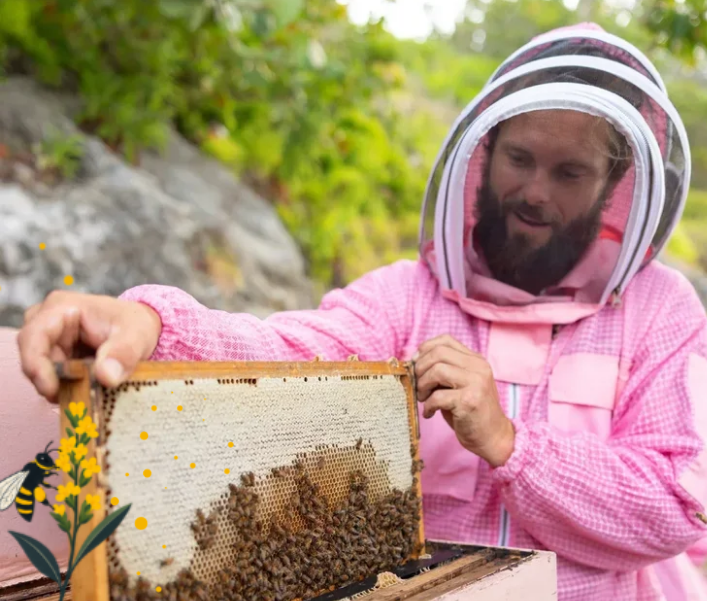
This year, we invite participants to explore the hidden living relationships and connections that keep ecosystems, food systems, cultures, coastlines and communities alive: from pollination, dispersal and spores to ocean life, night-time ecology, human knowledge-sharing and the everyday actions that help nature recover.
Just as pollen moves through ecosystems, ideas, habits and actions move through communities. Every participant is invited to become a Pollinator of Change by understanding the relationships that sustain life, recognising our place within them and helping at least one other person adopt a pollinator-positive behaviour.
🌼 Explore the activity guide: Global Action Days 2027 — Foundation for Environmental Education
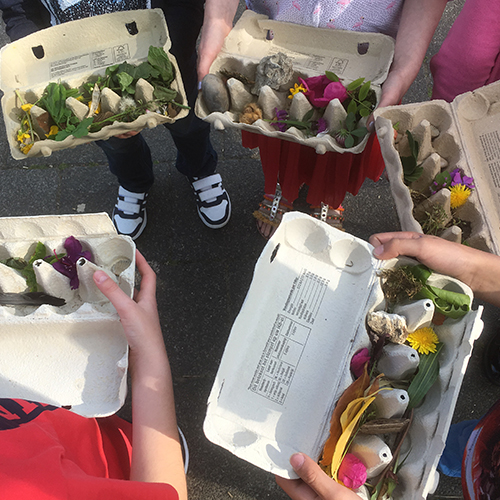
Participate in The Great Plant Hunt for free! A teaching project of five lessons, in which students of group 5, 6, 7 or 8 investigate and map the environment of the school. They investigate the similarities and differences between plants and animals, they collect & study natural treasures and they make an action plan to increase the biodiversity around the school.
Content lessons
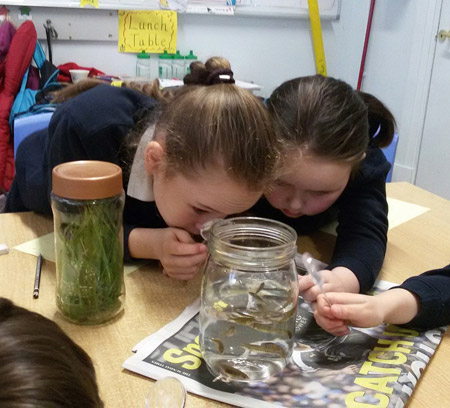
The teaching package contains a series of five lessons (of 30-60 min) for students from groups 5-6 (the 'adventurers') and 7-8 (the 'discoverers') about biodiversity around the school. The setup is the same for both groups, the level differs. For the best learning effect, the lessons are carried out consecutively, for example during a project week or spread over a longer period. To find out how much the students learn from the project, you take the same knowledge test before and after the five lessons.
The Great Plant Hunt consists of the following lessons:
- General information and quiz
- Treasure map of nature
- Learning cards
- Nature treasure chest
- Even more biodiversity
Check out our preview for more information
For all primary schools
The Great Plant Hunt is suitable for all primary schools. If your school participates in Eco-Schools, this project fits in seamlessly with the theme 'green'. Green is one of the ten themes of Eco-Schools. Biodiversity is a very important part of this. Does the Eco-scan (step 2) show that you want to get started with green? Then this project can be a nice concrete implementation of that. For schools that do not (yet) participate in Eco-Schools, De Grote Plantenjacht is very suitable for working with students on the theme of 'green' in an interactive way.
Period of time
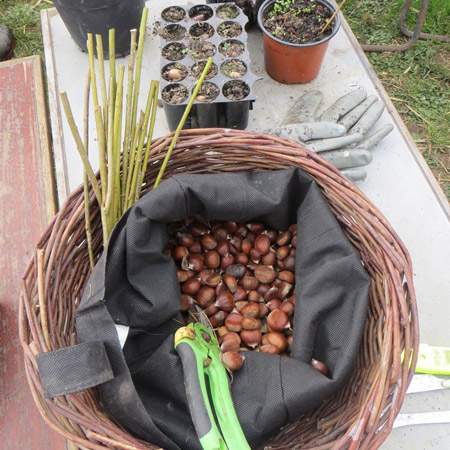
You can perform The Great Plant Hunt during the entire school year. In practice, autumn and spring prove to be very suitable periods. One school does all lessons in one project week, the other school occasionally does a lesson spread over a longer period.
Participation is free
Participation in The Great Plant Hunt is free. We would appreciate it if you would like to share your experiences with us and send us, for example, photos, stories and floor plans made by the students. Then we stay well informed.
Register
Do you want to participate in The Great Plant Hunt with your school or group? Then sign up below.
The Grote Plantenjacht was realized in collaboration with Eco-Schools International and with co-financing from the Toyota Fund for Europe.