

About Eco-Schools
The Green Flag is an accreditation for schools that consistently take sustainable steps-large or small- while putting their students first. With their actions, they will give sustainability a prominent spot in their education, building and surroundings. Everybody in and around the school is welcome to participate on the transition. Together, these aspects form the five pillars of the Eco-Schools philosophy: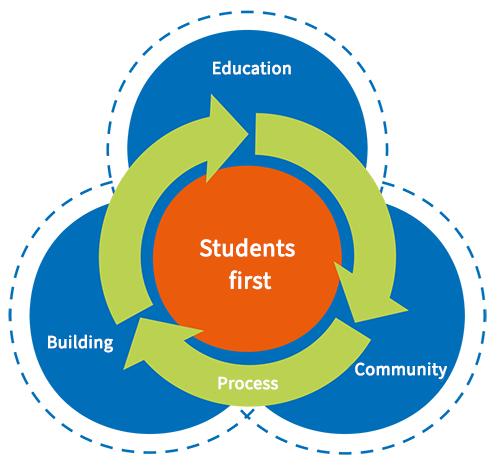
- Pupils take center stage (pupils focus point)
- The school always takes sustainable steps - large or small (process)
- Sustainability has a permanent place in education (education)
- Sustainability is visible in the building and the surroundings (building)
- Everyone in and around the school participates (community)
The international accreditation for sustainable schools
Schools that actively work on the five pillars, are eligible for the Green flag. This is the international accreditation for sustainable schools. Raising the flag is a festive moment! The students and teachers are in the spotlight, while the parents, neighborhood and local parties enjoy the event. It takes more or less two years to obtain the Green Flag. Throughout a portfolio the Eco-team is able to present what they have accomplished. In order to preserve the Green Flag, the school has to keep on developing. Every two years a new accreditation takes place.
Making a difference as a frontrunner
We do not see sustainability as a destination but as a continuous journey of discovery that we embark on together. The accreditation of Eco-Schools, the Green-Flag, will be granted to schools who contribute to this development. At the audit we will of course look at your marvelous results but the focus lays primarily on the development that you go through as a school. You are the frontrunners driving the sustainability movement in schools! This is not always easy. We are facing with people that come from other perspectives or beliefs, who feel less urgency or who simply cannot find the time and energy to delve into how things can be done differently. That is why our work is so important as pioneers.
We want to fully support all the motivation and willingness to take action. There are for instance sometimes schools that hold a little group of enthusiasts who can achieve a lot together. On the other hand, there are also schools where it’s a bit harder to cooperate. Eco-Schools want to support every school and Eco-team on their own ambition and level, in order to continuously grow together. This is why we apply different ambition levels.
Ambition levels
The road to a sustainable school can be quite different for each school. For example, the starting point for each school is different, the context is different and each school encounters different challenges. In addition, it varies per Eco-team how they relate to their surroundings: are there more plants, trees, and animals nearby, or is the tree standing by itself? Eco-Schools consist of four ambition levels: tree, garden, park and forest.
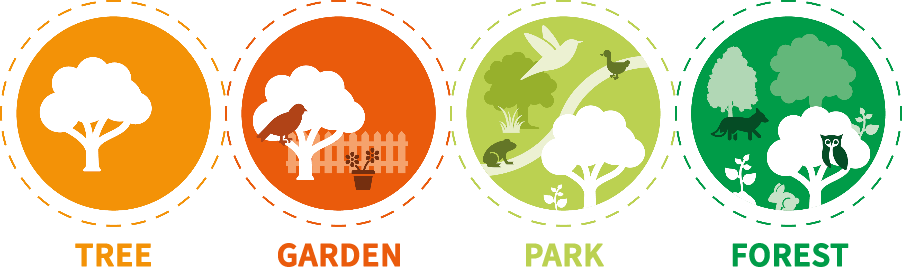
The figures above illustrate the ambition levels. They symbolize the place of the Eco-team (the tree) within the school. Hereby, you as a team focus on how much biodiversity there is in and around the tree. How many people are participating, how are they organized, and how much cohesion is there between different initiatives? The garden symbolizes a larger ground. How much biodiversity is there in and around the garden, how many people are involved? When an Eco-team wants to focus on a larger spectrum they can think of how much biodiversity there is in a park or even a forest. Each school takes different steps, measured by the level of their own ambition.
The reward for your work
When you apply for the Green Flag, you will show throughout your portfolio, how you have been working on Eco-schools’ five pillars. You will also reflect on your progress and achieved results. Are you working alone, like a tree, as your own Eco-team? Or is thinking/acting sustainably a part of your schools' culture? During the Green Flag audit visit, we will take a look at your projects and speak to people from school. Based on that we will provide tips and recommendations for the next step. Regardless of what your situation might be: the Green Flag is a reward for the work you delivered and everyone who participated in your development.
Audits
On the path to the first Green Flag, two audits take place: for the Bronze certificate and the Silver certificate. With these certificates you show that your school is on its way to the Green Flag.
The audit for the Bronze certificate can be requested after completing steps 1 to 4. For most schools this is one year after the start. The Silver certificate can be applied for after going through step 5. This is approximately six months after obtaining the Bronze certificate.
To be eligible for these certificates you request an audit via 'My Eco-Schools' on this website. Eco-Schools The Netherlands carry out the audits. We do this at the office, based on the documentens you uploaded via the audit page on 'My Eco-Schools'. After the audit you receive a report from us, in which we look back on what you have done and give recommendations for the next steps.
You can apply for the Green Flag as a school after completing all seven steps. You can also apply for this audit via your own login page on this website. For this an auditor from Eco-Schools The Netherlands will visit your school. After the audit you will receive a report with a review and recommendations for the continuation of the project.
The Green Flag is valid for two years. Therefore, it is important to continue the Eco-Schools proces, even after obtaining the Green Flag. After two years another audit takes place. This audit examines whether your school has improved and developed in comparison to the previous audit. After each audit you may prould show the flag for another two years.
Eco-schools mentor
Every participating school gets assigned to an Eco-Schools mentor. There are plenty of mentors that work actively across the Netherlands. You can find the mentors’ contact details and the participating organizations in the overview below:
Team Eco-Schools the Netherlands
The Eco-Schools team consists of enthusiastic and committed people. They are happy to provide you information, help you with trainings and carry out audits.
About Eco-Schools the Netherlands
Eco-Schools is a program of the world’s largest organization for nature and environmental education: the Foundation for Environmental Education (FEE). In the Netherlands, Eco-Schools is owned by IVN Natuureducatie. The coordination of the program has been outsourced to Vereniging GDO.
Vereniging GDO is the network of 90 municipalities and 140 nature and sustainability centers that work to bring nature and sustainability closer to people through education, participation, and communication. GDO members have extensive experience in supporting schools with local educational offerings (such as lessons and excursions), as well as acting as educational partners or local facilitators in the fields of nature and sustainability. Most Eco-Schools advisors therefore work for a nature and sustainability center or a regional branch of IVN Natuureducatie.
Read more about Vereniging GDO.
Partnerships
Eco-Schools is one of our initiatives aimed at helping young people learn for the world of tomorrow. From teacher training programs for sustainable education to support for municipal policy in the field of sustainability education, we carry out a wide range of projects to help schools address sustainability in a coherent and integrated way.
In doing so, we work closely with our partner SME, as well as with civil society organizations, governments, and businesses.
Learning for tomorrow
Vereniging GDO is an active member of the Learning for Tomorrow (Leren voor Morgen) cooperation. The goal of Learning for Tomorrow is to embed sustainability in the DNA of education. We do this on the basis of an integrated approach : the Whole School Approach.
At Eco-Schools, students are at the heart of the programme. They form the core of the Eco-Team, contribute ideas, take initiative and take responsibility. By actively involving students, sustainability becomes meaningful and visible throughout the school. This strengthens their sense of ownership and creates learning that extends beyond the classroom.
 Students are empowered
Through Eco-Schools, students experience that their ideas and actions can make a difference. The Eco-Schools approach is positive and hopeful. And it delivers results: 85% of schools report sustainable change since joining the programme. Students:
> Become active agents of change
> Develop knowledge, skills, values and attitudes
> Are engaged through a positive and hopeful approach
 Coherence across school
Many schools address sustainability an occasional basis. Eco-Schools helps create coherence between school plans, activities and lessons. This gives sustainability a permanent place within the school, aligned with ambitions and culture. The school:
> Takes an integrated approach to sustainability (Whole School Approach)
> Takes structured and continuous steps towards sustainability
> Makes sustainability a shared responsibility
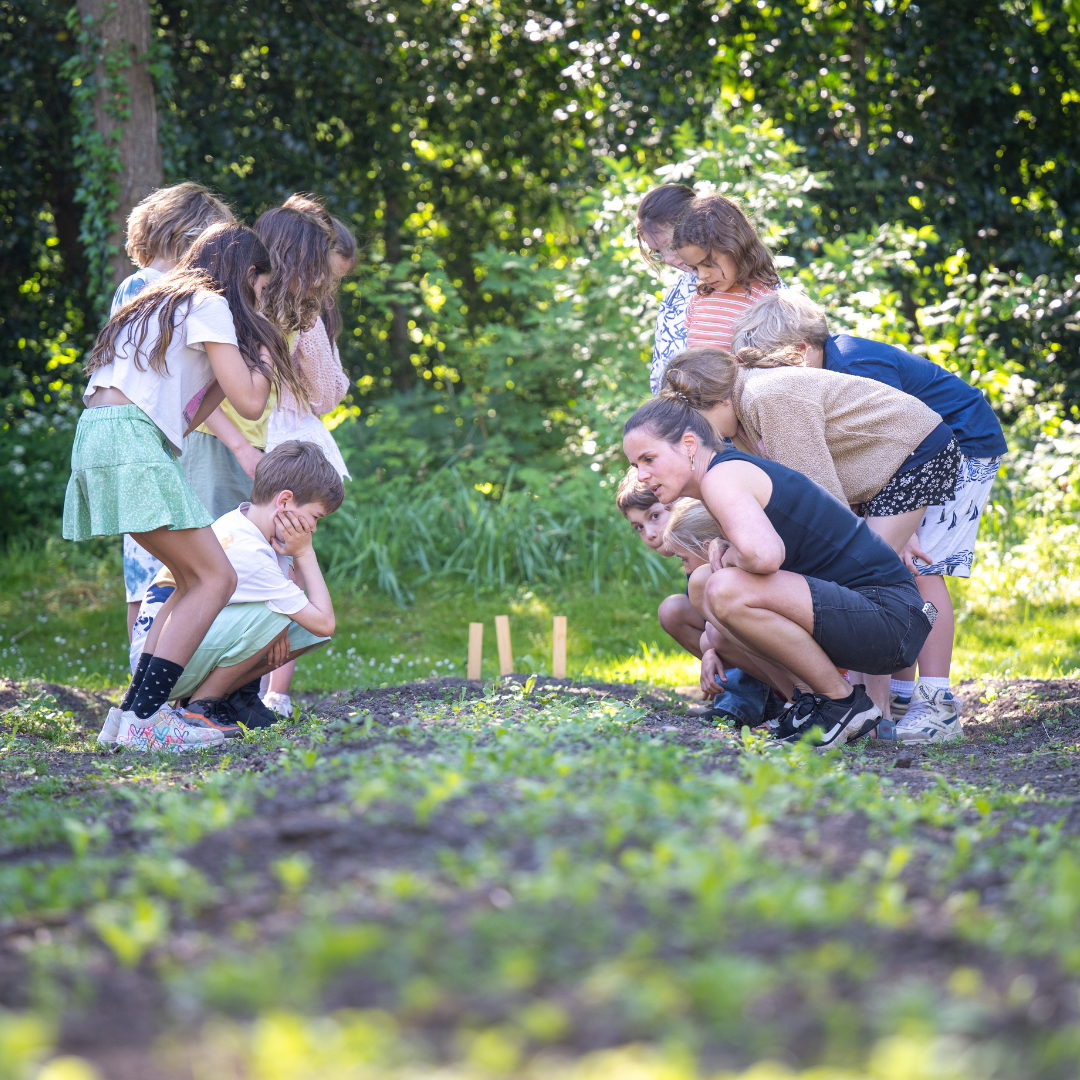 Everyone gets involved
Throughout the process, the Eco-Team involves everyone in and around the school: from students and teachers to local organisations and parents. The community:
> Creates opportunities for active citizenship
> Can enrich education through real-world sustainability challenges
> Experiences the school’s positive contribution to the community
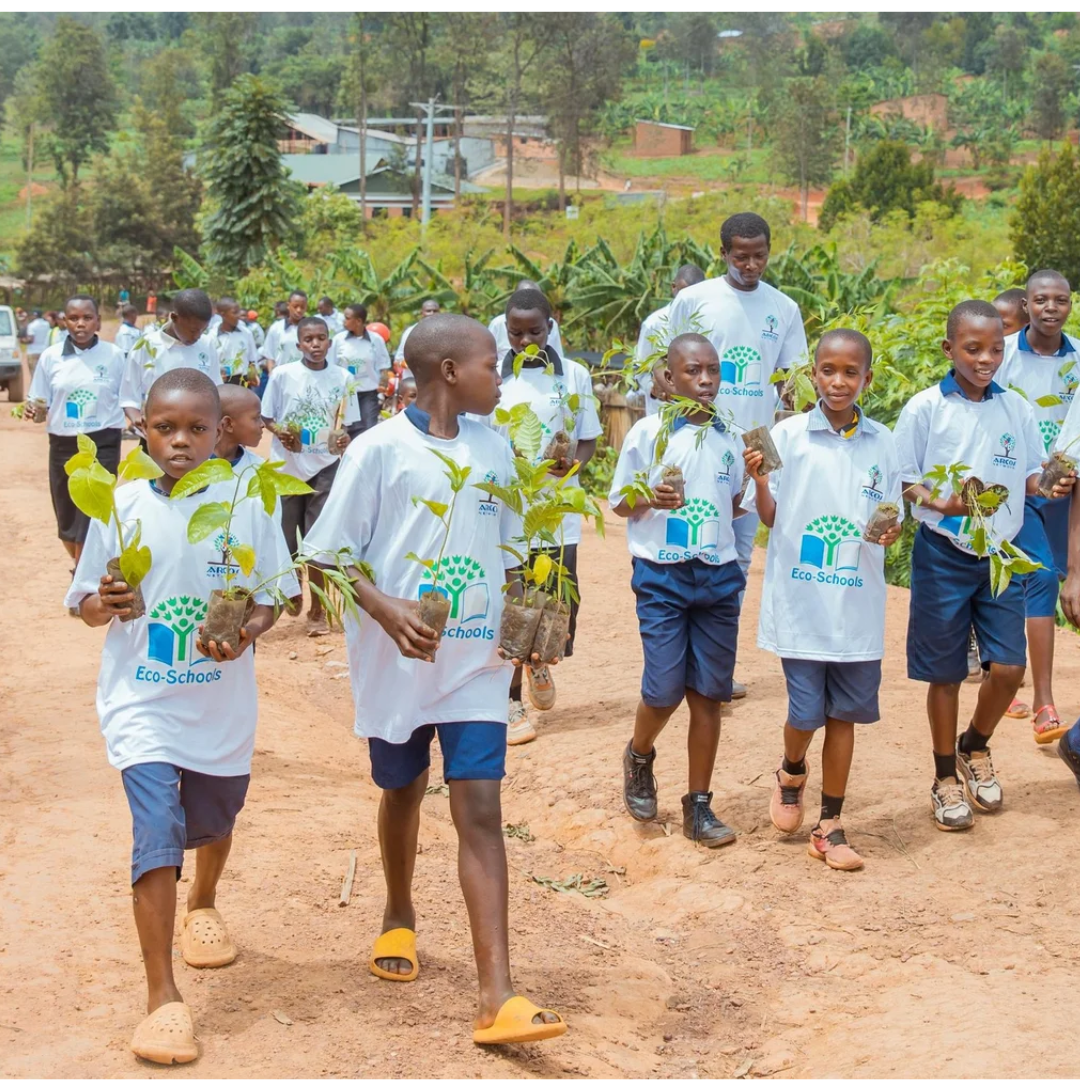 Global recognition
Eco-Schools is managed by the Foundation for Environmental Education (FEE), and the Green Flag is recognised as a sustainability certification by the United Nations. Internationally, Eco-Schools:
> Gives your school recognition as a sustainable school
> Enables you to collaborate with other Eco-Schools
> Helps create a powerful global movement for sustainability
Recognised activity within the Dutch Healthy School programme
Participation in Eco-Schools is a recognised activity within the Dutch Healthy School programme, under the theme Environment and Nature. Here you can find more information for primary education and secondary education.
The Seven-Step framework
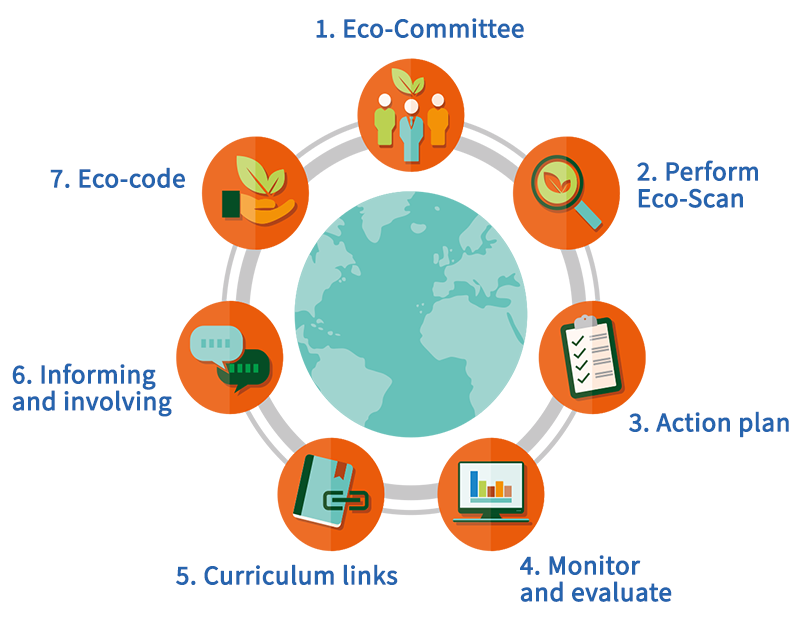
The Eco-Schools Seven-Step framework provides the Eco-Team with a clear and practical roadmap. At each step, you receive an instructional tool, tips and support from your own regional mentor. The steps are explained below.
Step 0. Statement of Intent
The school gets off to a celebratory start by having students, school leadership and, where appropriate, parents or other stakeholders sign a Statement of Intent. This demonstrates a shared commitment to working towards achieving the Green Flag.
Step 1. Eco-Committee
As a school, you appoint a coordinator for the Eco-Team. This could be a teacher, but it could also be a caretaker or teaching assistant, for example. The coordinator ensures that the Eco-Team meets regularly. The regional mentor coaches the Eco-Team throughout the process but does not attend every team meeting. At this stage, you start recruiting students to form an Eco-Team. The Eco-Team is a group of students who work to make their school more sustainable from within. Throughout the process, they develop important skills such as collaboration, communication and creative thinking. The composition of the Eco-Team will change somewhat each year as students move on to the next stage of their education.
Step 2. Perform Eco-Scan
Using the Eco-Scan, the Eco-Team assesses how sustainable the school is across ten different themes and identifies its strengths and areas for improvement. Based on the results, the team selects the themes they will focus on first.
Step 3. Action Plan
The Eco-Team develops an action plan with achievable goals and concrete actions for the selected sustainability themes. The actions focus on making education, the school environment and the behaviour of everyone within the school more sustainable.
Step 4. Monitor and evaluate
The Eco-Team regularly checks whether the actions are contributing to the agreed goals and adjusts them where necessary. By measuring and evaluating results, successes become visible and the team can identify areas for further improvement.
Step 5. Curriculum links
The school examines how sustainability is already incorporated into lessons and where this could be strengthened. Teachers play an important role in this process, while the Eco-Team remains involved in improving the place of sustainability within education.
Step 6. Inform and involve
The school makes its sustainability activities visible by informing and involving students, parents, teachers and other stakeholders. This increases awareness and strengthens the school’s sustainable identity and profile.
Step 7. Eco-code
The Eco-Team creates a creative Eco-Code that expresses the school’s sustainable identity and vision. This could take the form of a slogan, poster, song, video or work of art, for example.
The Sustainability Themes
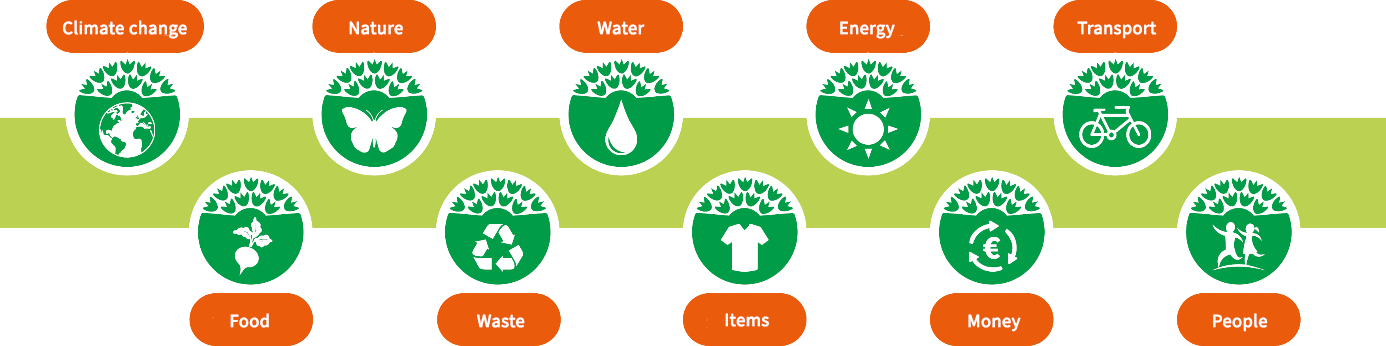
Eco-Schools focuses on ten different sustainability themes, covering both social and environmental aspects of sustainability. These themes also closely align with the 17 Sustainable Development Goals (SDGs). Using the Eco-Scan, the Eco-Team assesses the school’s performance across all ten themes. Based on the results of the scan and the interests of the students, the Eco-Team then selects two or three themes to focus on first. These selected themes form the foundation of the school’s action plan.
Audits and the Green Flag
Completing Steps 1 to 4 takes approximately one year. The school then shares its results and examples of its work, after which an auditor provides feedback and assesses whether the school qualifies for the Bronze Certificate. Steps 1, 2, 3 and 4 form an annual cycle of recruiting, measuring, planning and implementing, and evaluating, which the Eco-Team repeats each year. In the second year, the Eco-Team continues with Steps 5, 6 and 7. After completing Step 5, the school undergoes another assessment for the Silver Certificate.
Once all the steps have been completed, the school becomes eligible for the Green Flag, the international sustainability certification for schools. An auditor visits the school to assess its development and commitment. Achieving the Green Flag is celebrated with a special event, after which the school continues to develop and improve its sustainability efforts.